Fuerteventura myths and legends
A sacred mountain, mischievous witches and a light that follows travellers. Discover the stories woven into Fuerteventura’s landscape.
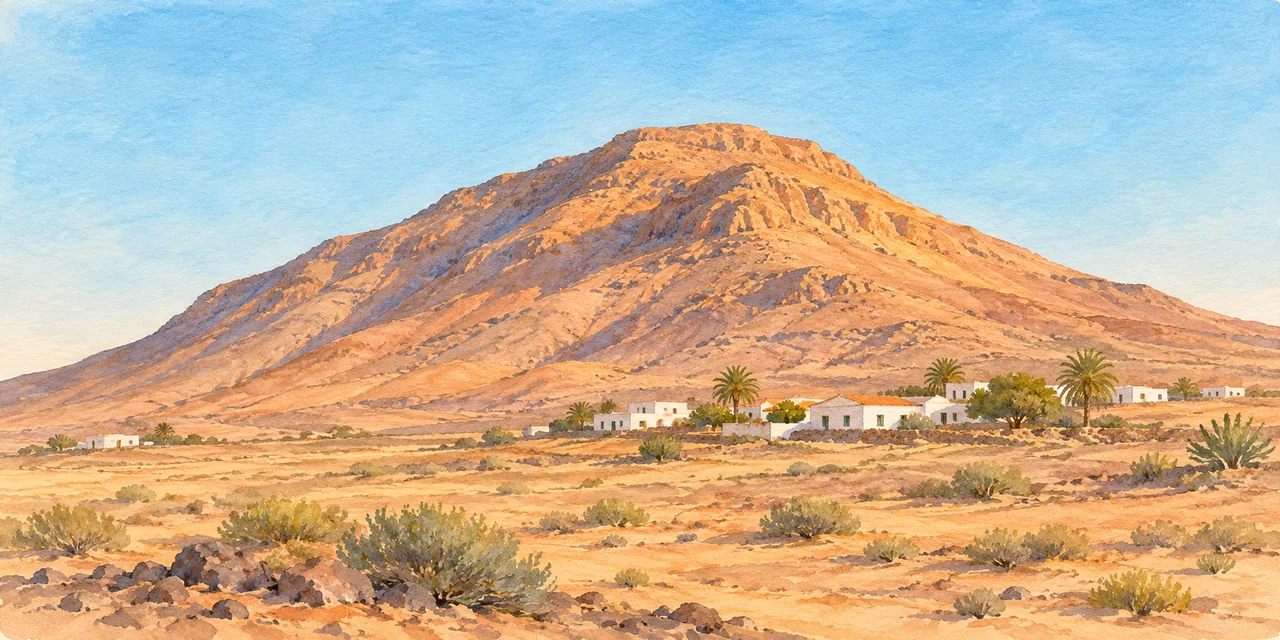
Fuerteventura’s myths and legends lead away from the shoreline and into a landscape of lonely paths, open plains and mountains with long memories. Tindaya is one of their most familiar settings: a place where stories of witches sit alongside a remarkable archaeological heritage.
These are retellings of recorded folklore. Different storytellers give different versions, and a tale’s place in island culture does not make its supernatural events historical facts.
The witches of Tindaya
Tindaya rises above the plains in the north of Fuerteventura, in the municipality of La Oliva. Its association with witches is much more than a recent visitor attraction. The Canary Islands Government’s heritage description explicitly recognises the mountain’s oral traditions and its alternative name, Montaña de las Brujas: the Mountain of the Witches. Read the official heritage description.
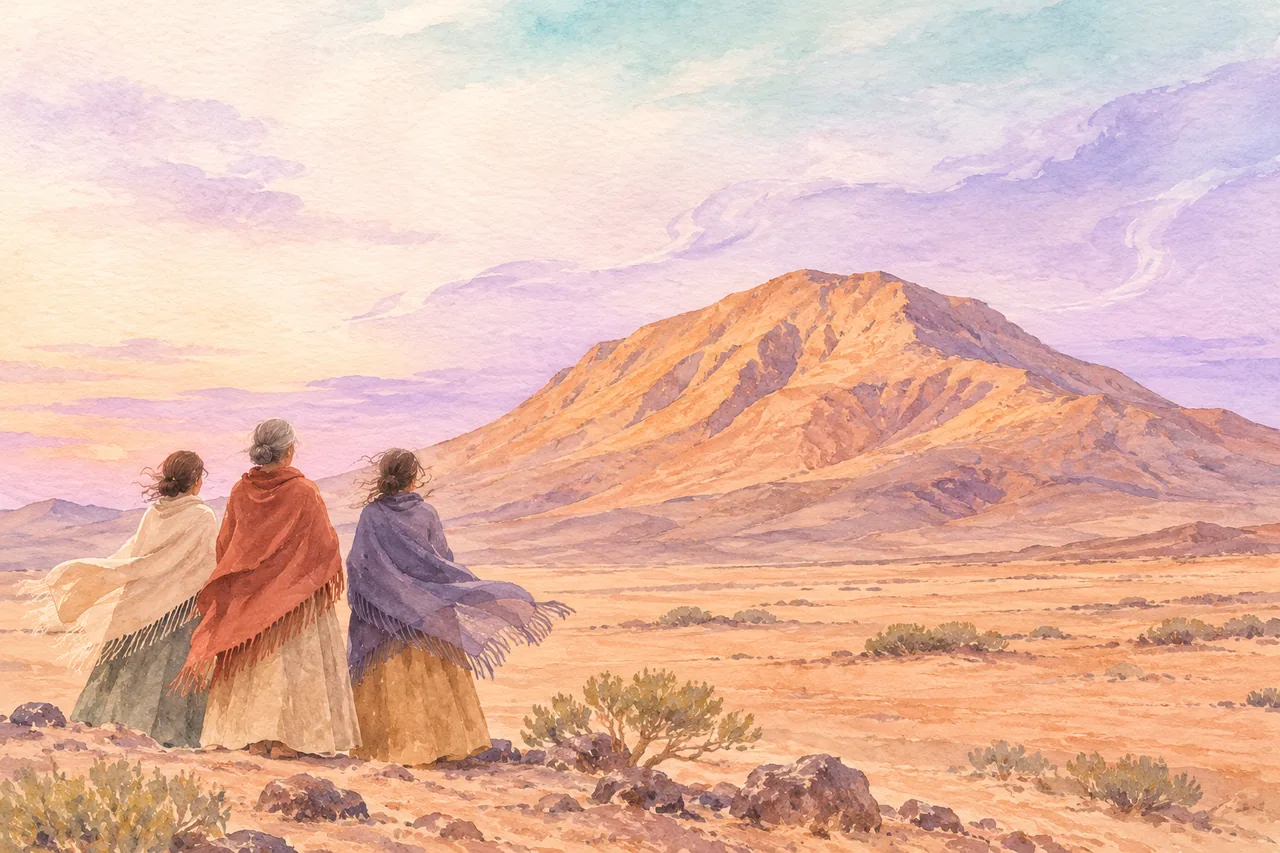
In the stories, ordinary journeys become strange. Animals appear where they should not be, a helpful encounter turns into a trick, and laughter from the mountain explains what the traveller cannot. Two short tales give a flavour of that tradition.
The camel on the mountain
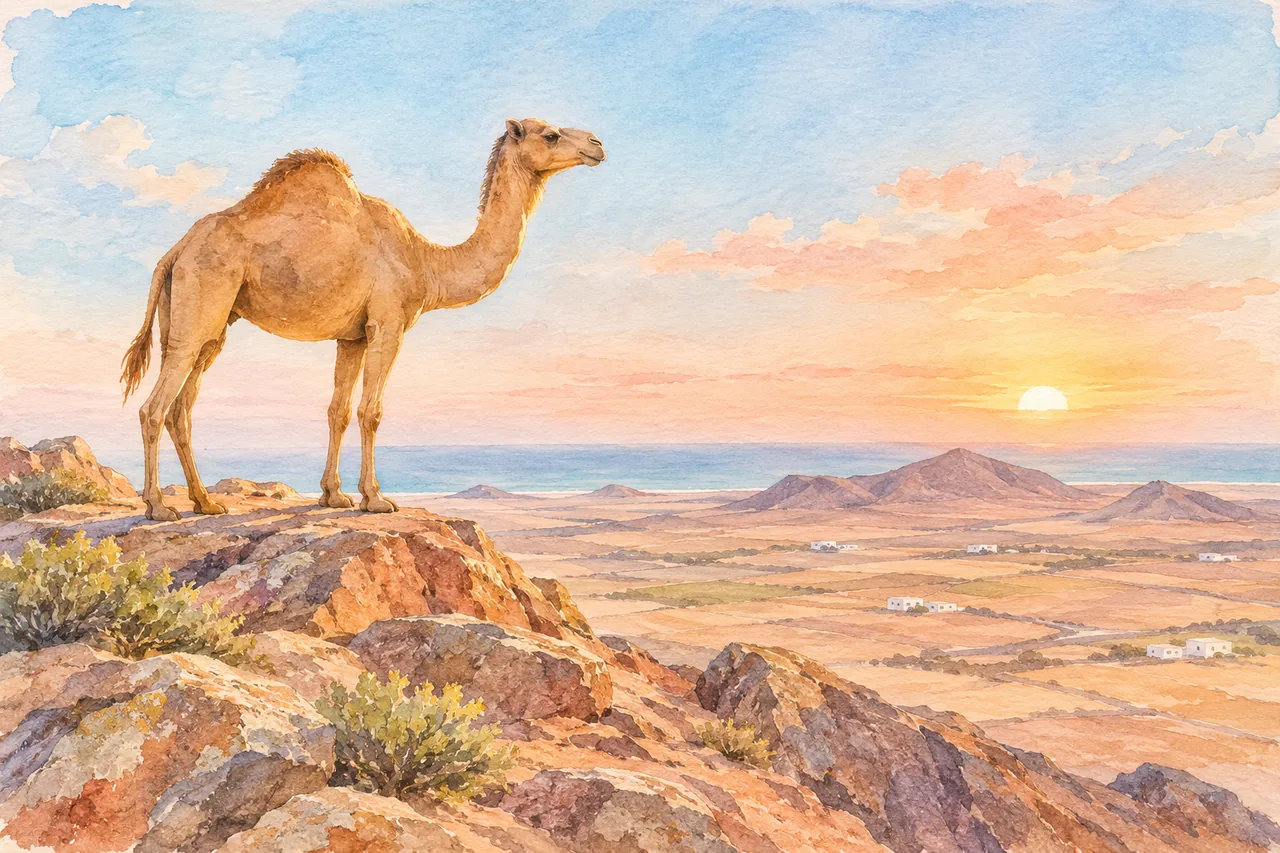
A camel is found high on Tindaya. How did it get there? In the tale, the answer is that the witches carried it up. The surprise depends on the mountain’s special status: the animal is somewhere people believed it should not be.
The donkeys that became stones
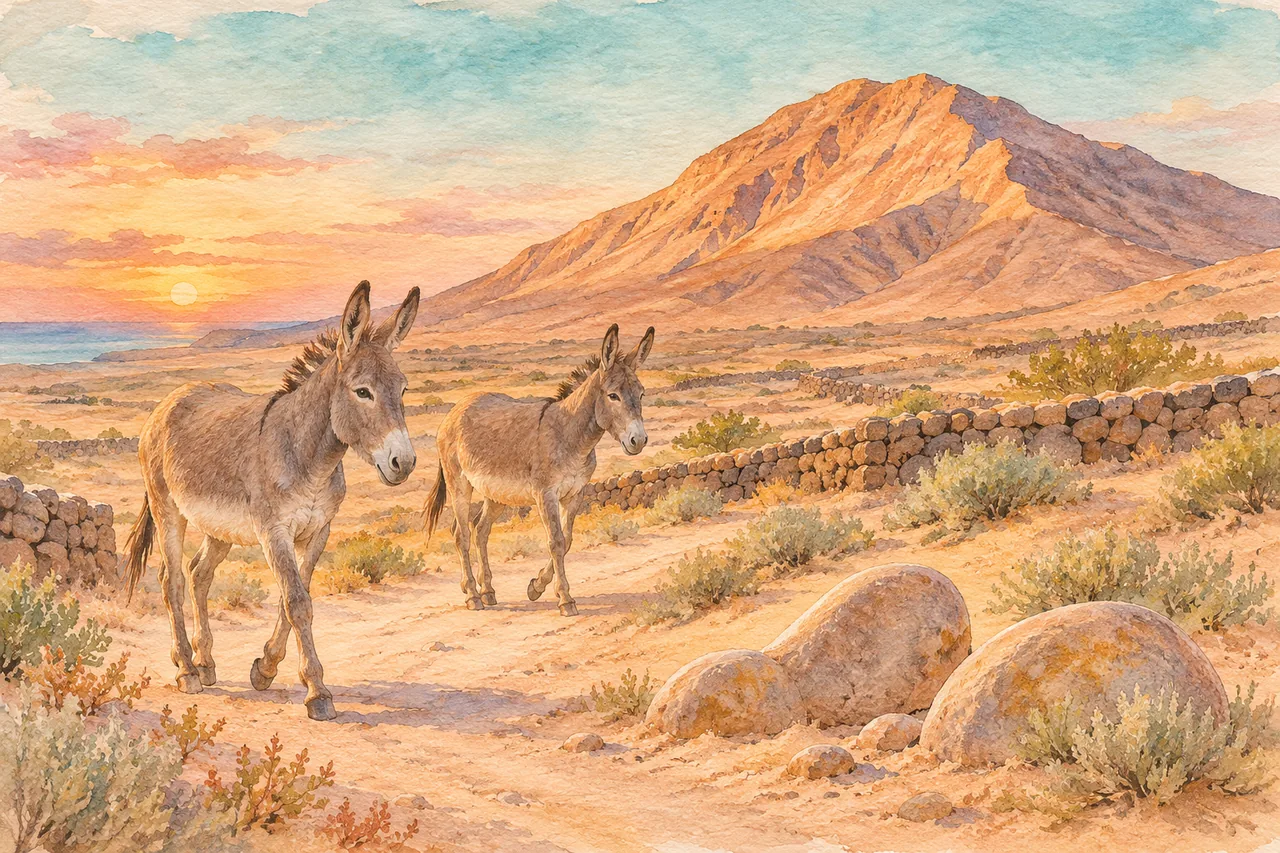
Two young men walking from Tefía towards Tindaya find a pair of donkeys and gratefully take a ride. At the foot of the mountain, they discover that they are sitting on stones. Above them, the witches are laughing.
Both stories are discussed in the essay on Tindaya in Canarias: identidad atlántica, preserved by the University of Las Palmas de Gran Canaria. They are a good introduction to the playful, unsettling side of these tales, rather than the broomsticks and pointed hats of a modern Halloween scene.
The real heritage behind the stories
Tindaya also has a history that can be studied through physical remains. The Cabildo identifies its footprint-shaped rock engravings, known as podomorphs, as an especially important legacy of Fuerteventura’s Indigenous inhabitants. The mountain is protected for both its cultural and natural value. Explore the Cabildo’s account of Tindaya’s rock engravings.
The engravings and the later witch stories belong to different kinds of evidence. Archaeology can document carvings and their setting; oral tradition records what people told about a place. Their coexistence does not establish that every witch tale preserves an ancient ritual, or that we know precisely what the carvings meant.
That is part of Tindaya’s fascination. You can appreciate the mountain as a sacred cultural landscape without needing one explanation to settle all its mysteries.
The Luz de Mafasca
Further into the island’s folklore is a light that refuses to stay still. The Luz de Mafasca is a wandering glow associated particularly with the plains around Antigua, although versions of the story reach well beyond a single location.
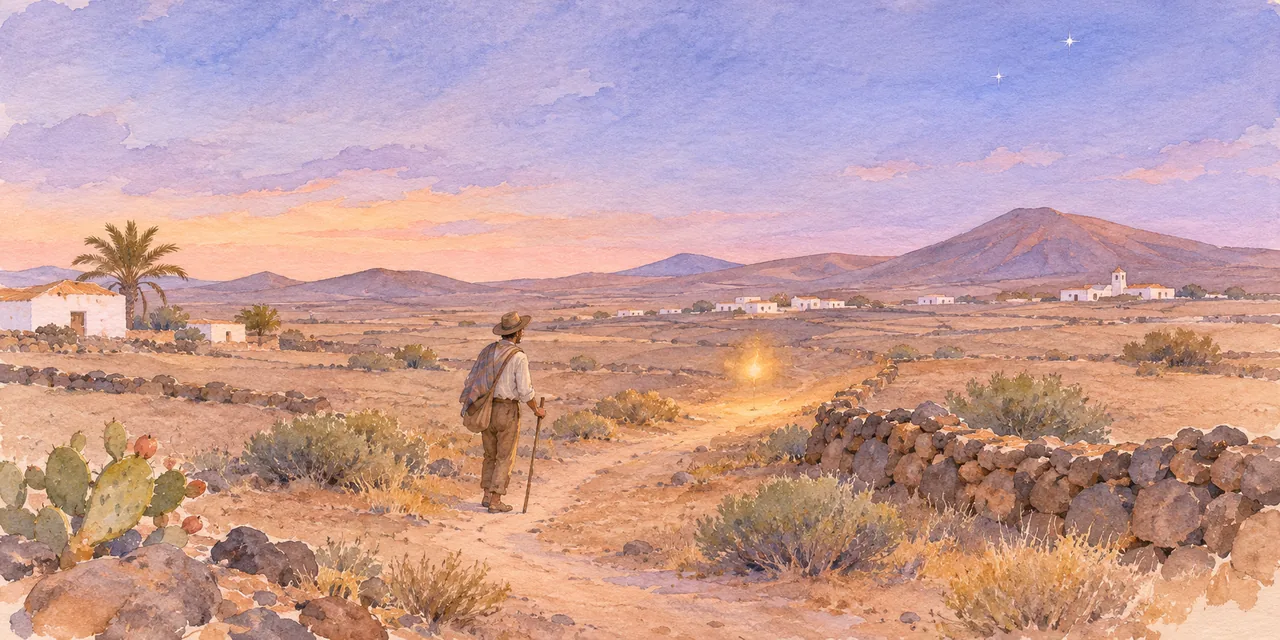
In a familiar telling, hungry people kill a sheep and use a wooden cross for their cooking fire. Afterwards, a restless light appears. The desecrated cross and a soul unable to find peace give the story its warning. Domingo Báez discusses several versions in Cuentos de Brujas de Fuerteventura, available from the Cabildo.
The details shift with the teller. Accounts describe a moving or jumping light, sometimes accompanying someone on a journey. A later study published by the Cabildo examines these descriptions and the range of religious, atmospheric and other explanations attached to them. It does not reduce every account to a single established cause. Read the study of the Luz de Mafasca in the island’s historical research proceedings.
For a visitor, the enduring story is as interesting as the question of what somebody saw: a small light on a huge dark plain, and the feeling that you might have company on the way home.
Seeing Tindaya respectfully
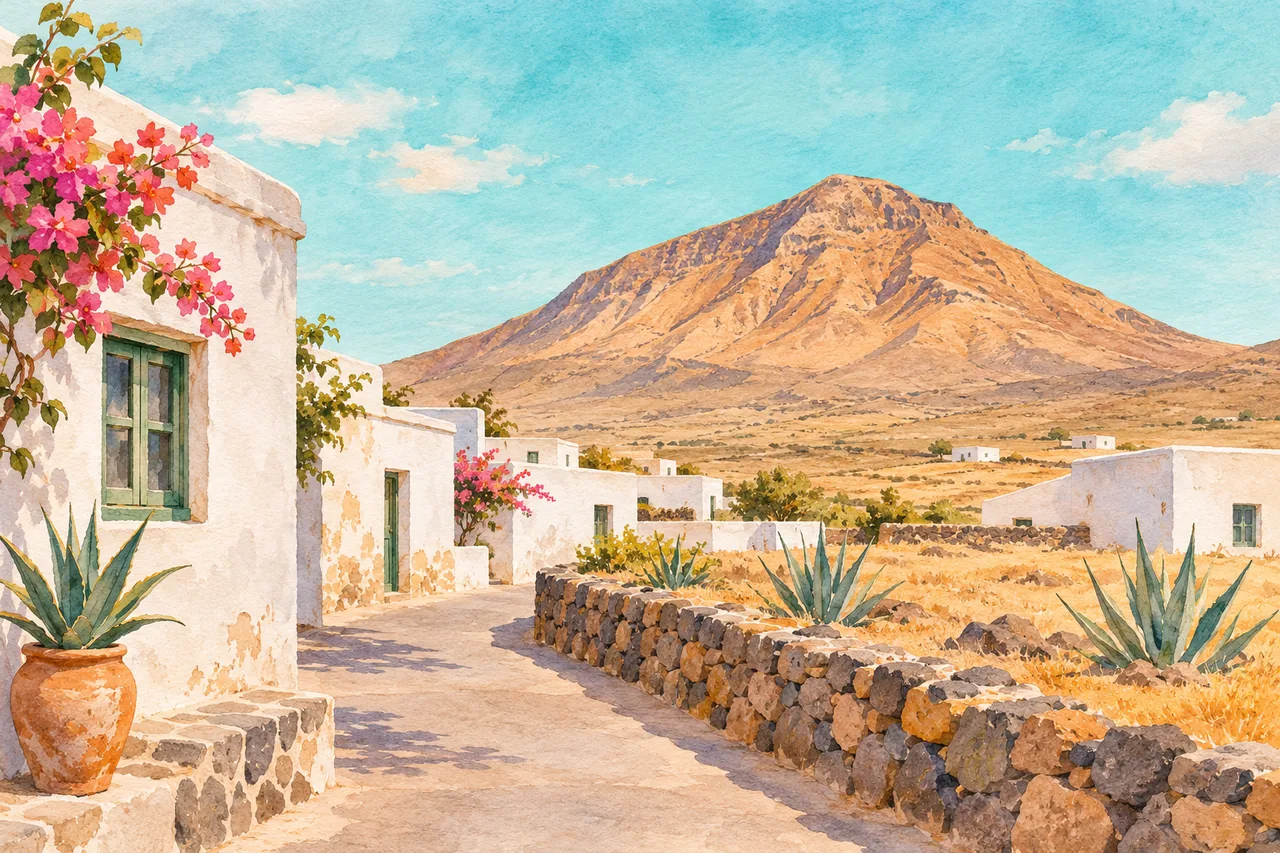
The village and the surrounding landscape offer a way to connect these tales with a real place. Our illustrations are artistic interpretations, including the village scene below; they are not photographs or reconstructions of historical events.
Do not treat the mountain as an unrestricted walking route. The Cabildo states that climbing Tindaya without authorisation from its heritage department is prohibited. Follow the signs on site and check directly with the Cabildo before planning access to the protected mountain. Its notice about unauthorised climbs includes the heritage department’s contact details.
If you are planning a day out, check the weather forecast for nearby La Oliva. For another side of the island afterwards, explore our Fuerteventura beach guide.